07.07.2022
Extruder Shafts: Grinding is more than a finishing operation.
Although grinding is one of the oldest manufacturing processes in the world, for a long time it lagged behind other machining processes in terms of attention. This situation is now changing.
From finishing to high performance machining
Grinding has often been described as a nice finishing operation. This perception may stem from the fact that most people are familiar with sandpaper or hardware store angle grinders, while far fewer have experience with advanced five axis high tech grinding machines. It is therefore understandable that awareness of the capabilities of modern grinding technology is not yet widespread.
Modern grinding processes achieve high material removal rates, comparable machining times and significantly lower tool costs. Even more compelling is the fact that complex workpieces can be manufactured completely on a single machine. A particularly insightful example can be found in the tools of extrusion lines.
Extrusion technology as a demanding field for grinding
Extrusion is a highly complex process. The extruder continuously presses viscous material through a shaping opening. This principle can be explained using Play Doh. The material is pressed through a mold and different shapes emerge depending on the attachment.
Products produced via extrusion include chewing gum, hoses, foils, door seals, V belts, toothed belts, pencils, noodles, peanut flips, ceramic products, bicycle rims, meat substitutes, PVC, breakfast cereals, millet snacks, onion rings, garbage cans and pastries. The list can be expanded considerably.
Extruder screws: High performance through precise grinding
Extrusion systems rely on various screw types such as pistons, single screw extruders, twin screw extruders, multi screw extruders, cascade extruders and planetary roller extruders. The geometry requirements differ depending on the product. Barrier screws used for mixing illustrate this well.
An optimal barrier screw features high melting capacity and lower melt temperature. In plastics processing, the barrier screw is the most important screw type and is used in high performance extrusion, for example for pipes, blown films and blow molds. A barrier screw separates solids and melt in the melting zone by means of an additional barrier flight.
Different geometries are required depending on the application to achieve the highest plasticizing performance. Barrier screws consist of zones such as feed zone, plasticizing zone, barrier zone, mixing section and shear section.
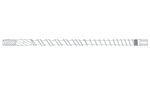
Schematic representation of a barrier screw with the 4 functional zones.
Mixing and shear parts for melt homogeneity
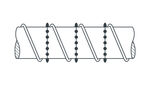
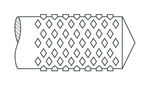
Mixing parts increase thermal and mechanical homogeneity by repeatedly splitting and recombining the melt. Flow dividing elements ensure uniform distribution.
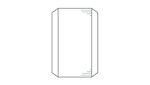
Common mixing geometries include:
Pins in the screw channel
Pineapple mixing section
Ring with bore
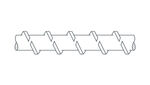
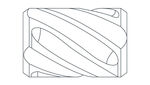
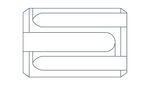
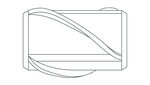
Shear parts increase homogeneity by applying controlled shear loads. Common shear geometries include:
Cylindrical shear part
Helical shear part
Maddock shear part
Troester shear part
The screw tip is also essential. As part of the non return valve RSP, it prevents melt from flowing back during injection. These components are subjected to extreme loads and therefore require demanding materials and alloys.
High performance plasticizing technology: Geometry and materials
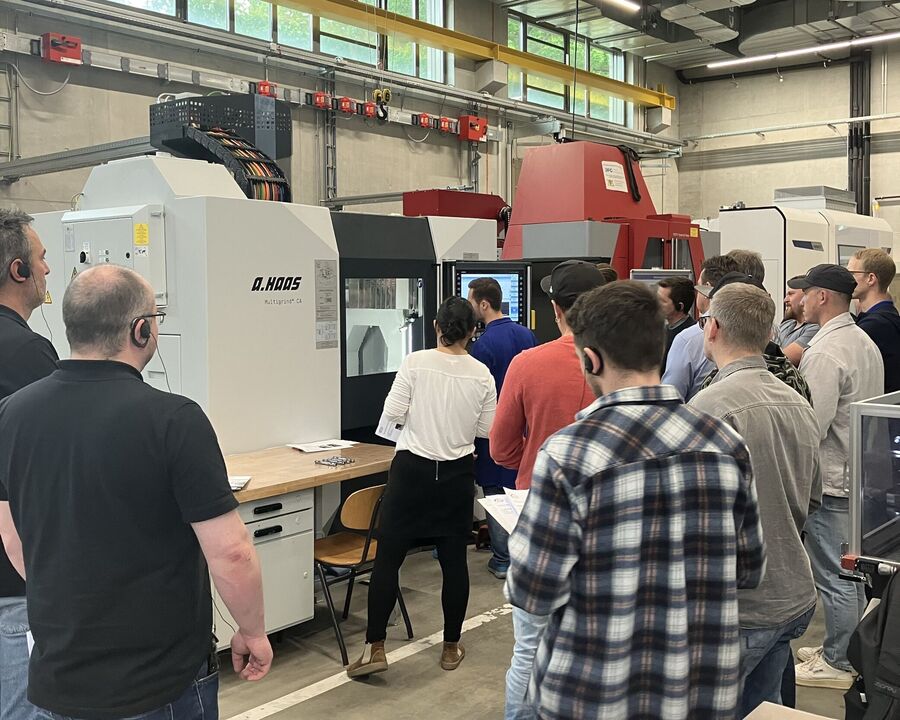
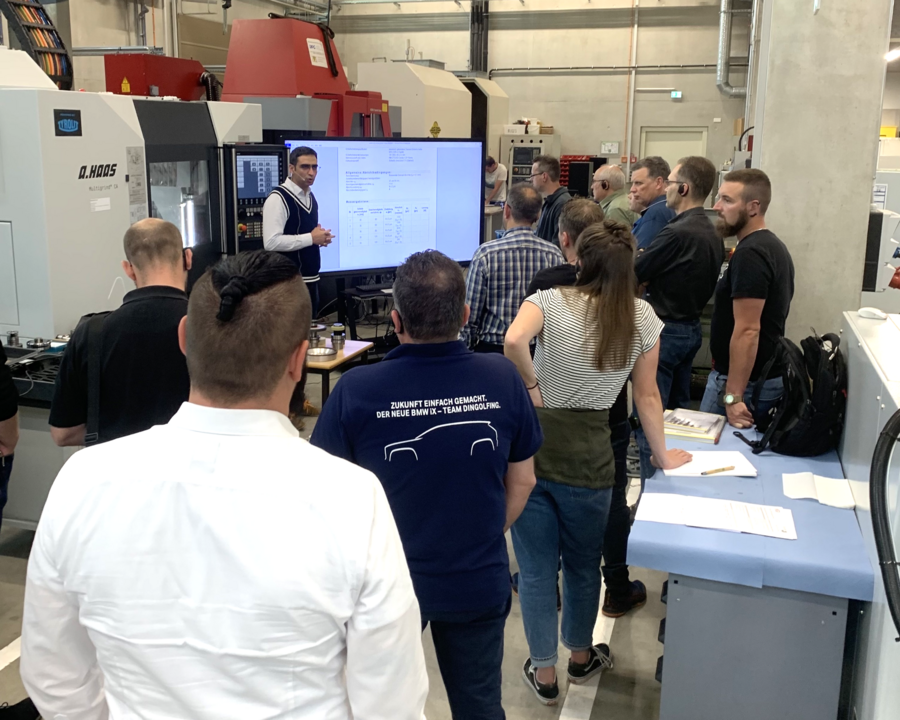
Extruder shafts involve diverse geometries, demanding materials and high quality material designs, often in large lengths. These factors make them ideal candidates for complete machining on high tech grinding machines of the Multigrind series.
Traditionally, such workpieces are manufactured on several machines such as lathes, milling machines, whirling machines and polishing machines. This results in longer setup and machining times.
High tech grinding machines from the Multigrind series enable production in a single clamping. This reduces working time, setup effort and workpiece costs. Various turnkey solutions demonstrate the potential of Multigrind hardware and software for machining turbine components made of Inconel, optical components made of sapphire glass, precision tools made of carbide and prostheses made of special alloys.
The author

Zita Bader
Zita Bader works in the marketing and communication department of Adelbert Haas GmbH.
Share article

Comments (0)
Write a comment